
If you’ve just learned you have a thyroid nodule, you’re probably feeling a mix of relief and worry – relief that it was caught, worry about what happens next. Most people who ask “am I a candidate for thyroid ablation?” turn out to be good candidates if they have a benign or low-risk nodule causing symptoms, a nodule that keeps growing, or a diagnosis like papillary thyroid cancer that’s small and slow-moving.
Ablation uses targeted energy to shrink or destroy problem tissue through a tiny needle, no scalpel, no general anesthesia, and often no downtime. It isn’t right for everyone, but for a large share of thyroid patients, it’s a real alternative to the operating room.
For decades, the standard advice for a thyroid nodule was simple: watch it, or cut it out. That second option comes with real costs. A thyroidectomy means a permanent scar, a hospital stay, general anesthesia, and often a lifetime on thyroid hormone replacement. For many patients, especially those with small or low-risk nodules, that’s a lot of surgery for a problem that doesn’t need it.
This is exactly the gap ablation fills. Instead of removing the entire gland, a doctor uses heat, cold, or electrical pulses to target only the nodule. The healthy thyroid tissue stays put, keeps working, and in most cases, patients never need hormone pills at all.
Not every thyroid issue is a match for ablation, but the list of people who do qualify is longer than most patients expect. You may be a candidate if:
You have a benign nodule that’s grown large enough to cause a visible bulge, trouble swallowing, or pressure on your throat
Your nodule is producing a “cosmetic” concern – a neck lump you’d rather not have
You’ve been diagnosed with a small, low-risk papillary thyroid cancer that meets active-surveillance criteria
You have a “hot” or overactive nodule causing hyperthyroid symptoms like a racing heart or anxiety
You’ve already had one thyroid surgery and a new or recurrent nodule has shown up
You want to avoid general anesthesia due to another health condition
You simply don’t want to lose your whole thyroid gland over one small spot
On the other hand, ablation typically isn’t the first choice for large, aggressive cancers, nodules with concerning features on ultrasound that haven’t been biopsied, or cases where the nodule sits dangerously close to the windpipe or major nerves without special precautions. This is why a proper workup, including a biopsy and imaging review, always comes before any treatment decision.
One reason ablation candidacy is broader than people assume is that it isn’t one single procedure. There are several methods, and the right one depends on the size, location, and type of your nodule.
Radiofrequency ablation (RFA) is considered the gold standard for most benign nodules. It uses heat delivered via a thin probe to shrink the nodule from the inside, usually in a single in-office visit with no incision. Most patients are back to normal activity the same day.
For larger or more stubborn nodules, microwave ablation (MWA) delivers a faster, more intense form of heat. It’s often the better fit when a nodule has resisted shrinking with standard RFA, and some patients see up to 80% shrinkage within just three months.
If your nodule lies close to the vocal cord nerve or another sensitive structure, heat-based methods may pose greater risk. That’s where nPulse™ (nsPFA) comes in. It uses ultra-fast electrical pulses rather than heat, making it one of the safer options for nodules near critical anatomy.
Ablation candidacy isn’t limited to the thyroid. If you’ve been told your calcium levels are high and a parathyroid gland is the culprit, parathyroid ablation may spare you a trip to the operating room too. This is especially relevant for patients who are poor surgical candidates due to age or other health conditions, or who simply want to avoid an operation for a single overactive gland.
Many patients assume ablation candidacy comes down to age, but that’s rarely the deciding factor. What matters more is:
Nodule size and growth pattern. A stable, small nodule might just need monitoring. A growing one is a stronger candidate for treatment.
Symptoms. Difficulty swallowing, a persistent throat tickle, or visible neck swelling all push toward treatment.
Nodule composition. Solid, cystic, or mixed nodules each respond differently, and that shapes which ablation method fits best.
Prior treatment history. Patients who’ve already had surgery and developed a new nodule are often excellent candidates, since a second operation carries more risk than the first.
Personal priorities. Some patients care most about avoiding a scar. Others want to skip hormone replacement. Both are valid reasons to explore ablation.
The only way to know for certain whether you’re a candidate is to have your ultrasound and, if needed, your biopsy results reviewed by someone who does this work every day. This matters more than it might seem. A doctor who performs a handful of ablations a year and one who has performed thousands will not always agree on who qualifies, because judgment calls about nodule location, size cutoffs, and technique selection come from experience.
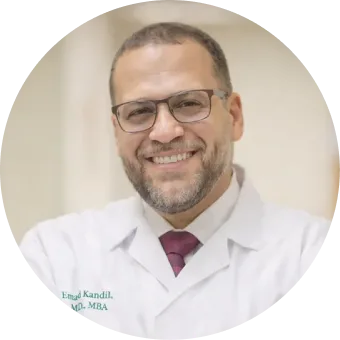
Dr. Emad Kandil has performed numerous thyroid and parathyroid ablation procedures. That volume of experience means patients who were told surgery was their only option elsewhere often learn they have another path forward here.
If you’ve been given a surgical recommendation and it doesn’t sit right with you, or if you just found out about a nodule and want to understand all your options before deciding, the next step is a thorough evaluation of your scans and pathology. That’s the only way to move from “maybe” to a real answer.
Our practice offers virtual consultations, so you can start that conversation from home, and new patients are typically seen within two days. You can book a consultation to have your case reviewed and find out which treatment path, if any, fits your situation. Thousands of patients have avoided surgery this way. There’s a good chance you can too.
About the Author
Dr. Emad kandil
September 18, 2026