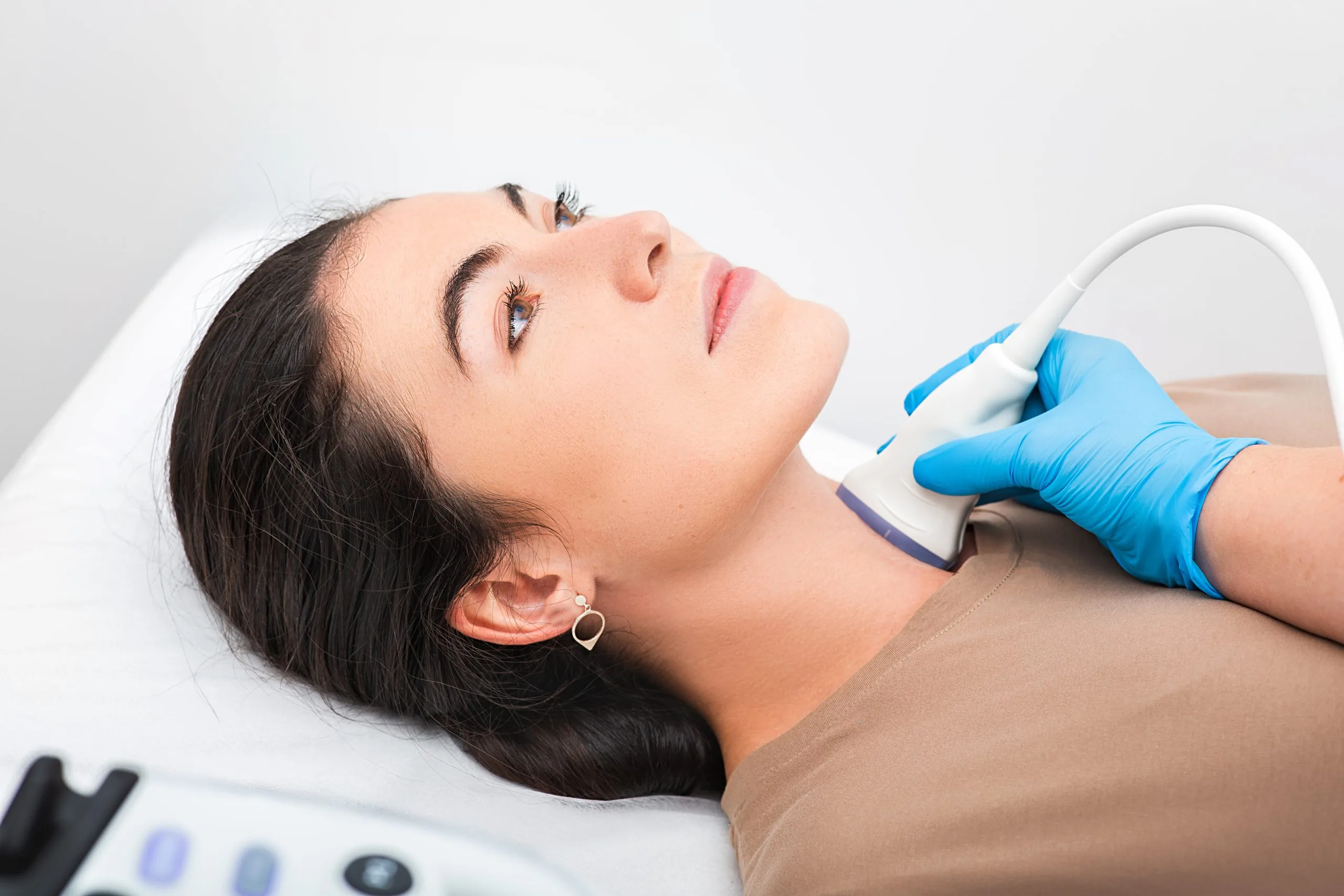
Nanopulse ablation (nsPFA) is a non-thermal, non-surgical treatment that uses ultra-short electrical pulses – measured in billionths of a second – to shrink thyroid nodules without heat, without a neck incision, and without removing the thyroid gland. Dr. Emad Kandil performs nsPFA as an outpatient procedure under local anesthesia, so most patients walk in, have the problem treated, and walk out the same day.
This article explains how the technology works, who it helps, and what the recovery looks like.
Most ablation methods used on thyroid nodules – including radiofrequency ablation (RFA) and microwave ablation (MWA) – work by heating tissue until the cells die. Nanopulse ablation takes a different path, using very fast, very brief bursts of electrical energy to destabilize the targeted cells.
Because there is no burning and no freezing, delicate nearby structures – nerves and blood vessels in the neck – are treated far more gently. That is why nsPFA is often described as non-thermal thyroid ablation.
Dr. Emad Kandil guides the treatment with real-time ultrasound. The nodule is mapped, a thin probe is positioned through the skin, and energy is delivered only where it is aimed. There is no cutting and no stitches, which is why patients often hear this described as a scarless approach.
Every cell is surrounded by a thin membrane, like a balloon wall with tiny doors in it. The nanosecond pulses open thousands of microscopic, permanent pores in that membrane within the targeted tissue, so the cell can no longer regulate what goes in and out and shuts itself down.
Over the following weeks and months, the immune system reabsorbs the treated tissue and the nodule shrinks. Nothing is left behind to remove, and healthy thyroid tissue outside the treatment zone is spared and continues functioning normally.
The traditional answer to a bothersome thyroid nodule has been surgery – removing half or all of the thyroid gland. That works, but it comes with a neck incision and, for many patients, a lifetime of daily thyroid hormone replacement.
Gland preservation. The goal is to treat only the nodule and keep your natural thyroid function intact – helping patients avoid lifelong hormone medication.
No incision, no scar. Treatment is delivered through a small needle puncture in the skin under ultrasound guidance.
Local anesthesia only. No general anesthesia, no breathing tube, no hospital admission.
Fast. Many nodule treatments take roughly 10 minutes of active ablation time.
Same-day recovery. Patients go home the same day and usually return to normal activity quickly.
Non-thermal precision. Energy affects the targeted tissue while limiting collateral effects on nearby nerves, vessels, and airway structures.
Not every nodule needs treatment, and not every nodule is right for nsPFA. Evaluation always begins with ultrasound imaging, thyroid function labs, and – when indicated – biopsy or genetic molecular testing.
Nanopulse ablation may be considered for patients who have a thyroid nodule that is:
Benign or appropriately evaluated for malignancy. The nodule should have the appropriate ultrasound and cytology or molecular evaluation before ablation. Suspicious or clearly malignant nodules may require surgery or another cancer-directed treatment instead.
Symptomatic. A benign nodule that causes pressure, difficulty swallowing, a choking sensation, neck discomfort, or other local symptoms may be a candidate for treatment.
Cosmetically bothersome. Some nodules create a visible bulge or asymmetry in the neck even when they do not cause significant physical symptoms.
Growing over time. A benign nodule that demonstrates meaningful growth may warrant treatment, particularly when it begins causing symptoms or cosmetic concerns.
Appropriate in size and location. Ultrasound helps determine whether the nodule can be safely reached and treated while protecting the surrounding nerves, blood vessels, airway, and other important neck structures.
A consultation is crucial because a nodule’s appearance on ultrasound, biopsy results, size, location, and relationship to nearby structures can all affect treatment decisions. Patients with suspicious thyroid nodules, confirmed thyroid cancer, significant thyroid dysfunction, or nodules in particularly challenging locations may be better served by surgery or another treatment.
For this reason, nsPFA should be viewed as a patient-specific treatment rather than a one-size-fits-all alternative to thyroid surgery. Dr. Emad Kandil reviews the imaging, laboratory results, and pathology or molecular findings to determine whether nanopulse ablation is an appropriate option and to develop a treatment plan tailored to the individual patient.
Nanopulse ablation (nsPFA) for thyroid nodules is a non-thermal, incision-free treatment that uses nanosecond electrical pulses to shrink nodules while preserving the thyroid gland – performed in about 10 minutes under local anesthesia with same-day recovery.
For patients with symptomatic or visible nodules who want to avoid surgery, scars, and lifelong hormone medication, nsPFA offers a precise alternative. The next step is an evaluation with ultrasound and lab review to confirm whether your nodule is a fit.
About the Author
Dr. Emad kandil
August 11, 2026