Our Treatment Options

Advanced options to evaluate and treat thyroid and related conditions

Ethanol Ablation

A targeted option for select thyroid cysts and nodules
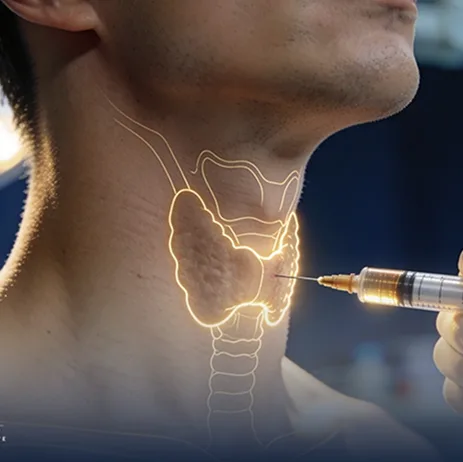
Ethanol ablation uses a small amount of medical alcohol to shrink specific thyroid cysts or fluid‑filled nodules. It is performed with ultrasound guidance and is often chosen when a cyst keeps refilling or causes discomfort.
  • Helps reduce the size of recurrent cysts
  • Performed with a fine needle under imaging
  • Often completed in a short outpatient visit

Genetic and Molecular Testing

Detailed analysis to better
understand nodule behavior

Genetic and molecular testing examines the cells from a thyroid nodule to identify markers that may clarify how the nodule behaves. It is often used when biopsy results are not clearly benign or when more information is needed before choosing next steps.
  • Helps refine the risk level of indeterminate nodules
  • Supports decision‑making when imaging is unclear
  • Uses advanced laboratory analysis of biopsy samples

Microwave Ablation

A minimally invasive option for select
thyroid nodules

Microwave ablation uses controlled energy to reduce the size of certain thyroid nodules. Guided by ultrasound, it targets the nodule while preserving surrounding tissue.
  • Reduces nodule volume over time
  • Performed through a small needle under imaging
  • Designed to protect nearby structures

Neck Dissection Surgery

Precise removal of lymph nodes
when needed for cancer care
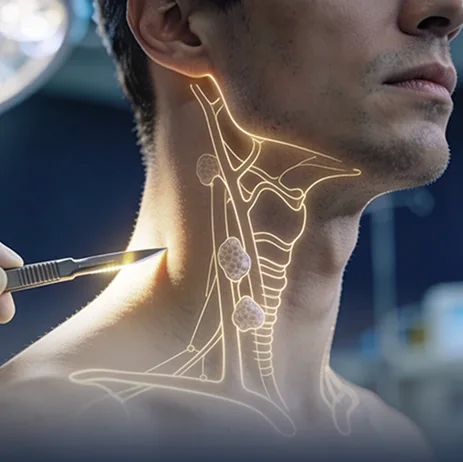
Neck dissection surgery removes lymph nodes that may contain or be at risk for cancer involvement. It is performed with careful attention to nerves, vessels, and surrounding structures to support both safety and long‑term function.
  • Targets specific lymph node areas
  • Uses detailed anatomical mapping
  • Supports comprehensive cancer management

Parathyroid Ablation

A focused technique for select
parathyroid lesions

Parathyroid ablation uses targeted energy to treat specific parathyroid lesions identified on imaging. It is considered when a lesion is clearly localized and meets criteria for a minimally invasive approach.
  • Uses precise ultrasound guidance
  • Avoids larger incisions
  • May be an option for well‑defined lesions

nPULSE nsPFA Non‑Thermal Thyroid Ablation

A non‑thermal option that preserves
surrounding tissue

nPULSE nsPFA uses non‑thermal pulsed energy to treat thyroid nodules without heat. This approach aims to maintain the integrity of nearby structures while reducing the size of the targeted nodule.
  • Non‑thermal technology designed for tissue preservation
  • Performed with a fine probe under imaging
  • Suitable for select benign nodules

Parathyroid Surgery

Surgical removal of overactive
parathyroid glands
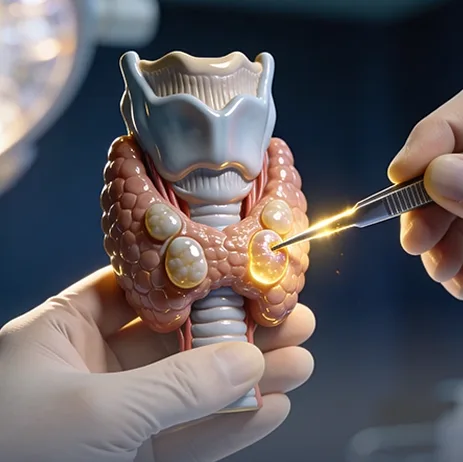
Parathyroid surgery removes one or more parathyroid glands that are producing excess hormone. It is performed with careful localization and precise dissection to support a safe and effective outcome.
  • Targets the gland causing hormone imbalance
  • Uses focused or bilateral exploration as needed
  • Supports long‑term calcium and bone health

Radiofrequency Ablation

A minimally invasive treatment for
select thyroid nodules

Radiofrequency ablation uses controlled heat to reduce the size of thyroid nodules. Guided by ultrasound, it treats the nodule while preserving the rest of the gland. This procedure is often chosen it when a nodule causes pressure, discomfort, or visible fullness.
  • Reduces nodule size gradually
  • Performed through a small needle
  • Designed to protect nearby structures

Thyroid Embolization

A vascular approach for select
thyroid conditions

Thyroid embolization reduces blood flow to targeted areas of the thyroid using tiny particles delivered through a catheter. It is considered in specific cases where reducing blood supply can help manage symptoms or nodule behavior.
  • Performed by an interventional specialist
  • Uses imaging to guide precise placement
  • Reduces blood flow to targeted tissue

Thyroid Surgery

Surgical removal of part or all of
the thyroid when needed
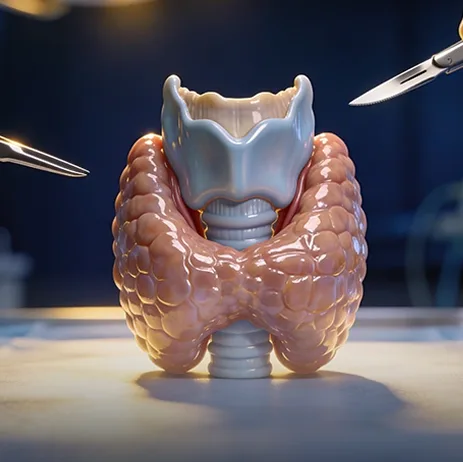
Thyroid surgery is performed for nodules, enlargement, or confirmed cancer when removal offers the best path forward. It focuses on protecting nerves, parathyroid glands, and surrounding structures while addressing the underlying condition.
  • Can remove part or the entire thyroid
  • Uses refined, high‑precision techniques
  • Supports long‑term health and function